Production of shape memory alloys.
TC2 is a kind of α+β type titanium alloy containing 6% aluminum and 4% vanadium, with higher strength and hardness than TC4ELI, and also has good toughness and corrosion resistance. It is mainly used in food machinery, ship rudder wheels, aircraft brakes and other fields.
TA1 is a kind of α-type pure titanium alloy, with excellent ductility and plasticity, but also has good corrosion resistance. Thanks to its low price, it is widely used in various kinds of equipment in the food industry, such as food tanks, presses, boilers and so on.
TA2 is an α+β type of titanium alloy with excellent toughness, strength, and corrosion resistance. It has more advantages than pure titanium, so it is more and more widely used in the food industry.
V, Important Compounds of Titanium and Their Uses
5.1 Titanium Dioxide
The most common compound of titanium is titanium dioxide, which is used to make white pigments.
TiO2 is a polycrystalline oxide that has three crystalline forms: anatase, platinoid, and rutile. In nature, anatase and rutile exist as minerals, but it is difficult to find minerals of the platinoid type.
Industrially produced titanium dioxide, commonly known as titanium white, is an important white pigment.
Since titanium dioxide does not react with many other substances under normal circumstances, and has strong covering power and non-toxicity, it is an excellent white pigment. Its coverage is better than that of lead white [2PbCO3 Pb(OH)2], and its durability is better than that of zinc white (ZnO), and it is regarded as "the king of white pigment".
Applications
5.1.1 High-grade white paint.
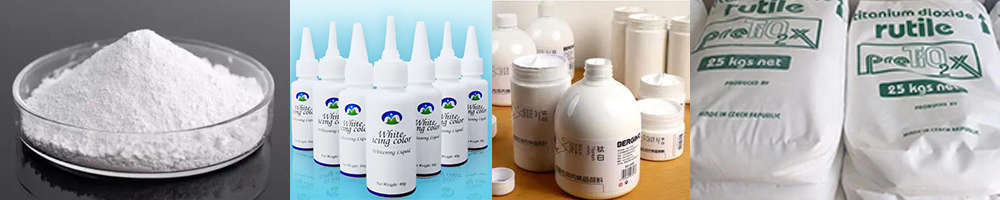
5.1.2 Whitening agent in cosmetology.
Titanium dioxide is mainly to protect the skin and can prevent the penetration of ultraviolet rays to a certain extent.
5.1.3
Used as a filler in papermaking.
5.1.4
As a matting agent in man-made fibers.
5.1.5
It can also be used in hard titanium alloy, heat-resistant glass, and anti-ultraviolet glass, adding TiO2 in ceramics can enhance acid resistance.
5.1.6
Titanium dioxide can be used as catalysts.
Titanium dioxide and barium carbonate co-melt to form barium titanate (BaTiO3).
5.1.7
TiO2 can be chlorinated into TiCl4 by Cl2 when heated to 800~1000℃ in the presence of reducing agent C, which is the main method of industrial production of TiCl4.
5.1.8 Titanium Dioxide in Food
5.1.8.1 Is Titanium Dioxide Safe
| Ti02 is an odorless, non-toxic white powder, and has been certified by the U.S. Food and Drug Administration's (FDA) |
 |
5.1.8.2 Application in food
Food Testing Institute as safe and harmless to humans.
Food-grade titanium dioxide, commonly known as albumin, is used as a coloring agent and food whitening agent, or pharmaceutical-grade titanium dioxide, a non-toxic, odorless, white powder.
Food: Applied to meat products, surimi products, candy, candy coating, jelly, chewing gum, baked goods, cheese, seasoning, non-sweetener type solid drinks, concentrated solid drinks, dairy drinks, and puffed food. Candied fruit, jam, salad dressing, mayonnaise, and other foods that need whitening.
In addition to the whitening effect, titanium dioxide can produce a softer color if used in combination with other pigments.
Titanium dioxide is used as a diluent in bread improver, Its purpose is to make the enzyme used in bread improver be evenly added to the flour, improve the dispersion of the product, can replace the diluent calcium carbonate (limestone), calcium sulfate (gypsum) and so on.
5.2 Titanic acid
Titanic acid refers to the hydrate of titanium dioxide. The two most important titanic acids are prototitanic acid and metatitanic acid.
Titanic acid is mainly used as chemical fiber matting agent, catalyst and seawater adsorbent. It is also the raw material for making pure titanium sulfate.
5.3 Lithium titanate
Chemical formula Li4Ti5O12
New Energy
The new lithium titanate is a "zero-tension" material, and used in the manufacture of large-scale energy storage, power lithium batteries.
The new lithium battery charge/discharge cycle can be more than thousands of times, so the battery can be used for at least 10 years.
5.4 Titanium tetrachloride
5.4.1 Property
Titanium tetrachloride is a colorless liquid with density of 1.726g/cm (at 20℃), melting point of 250K and boiling point of 409K. It has irritating odor and is easily hydrolyzed in water or humid air. Therefore, titanium tetrachloride fumes when exposed to air. It is generally produced from rutile and ilmenite. It is an important intermediate in the production of titanium.
5.4.2Applications:
5.4.2.1 Military
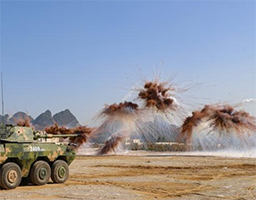 |
Titanium tetrachloride is material of smoke bomb. |
5.4.2.2 Advertisement
It can be used commercially for aerial advertising.
5.4.2.3 Polymer synthesis.
Ziegler, a West German, invented in 1953 the use of TiCl4 and (C2H5)3Al as a catalyst for the successful directional polymerization of ethylene at atmospheric pressure, which was called Ziegler's catalyst.
In 1954, the Italian Natta improved Ziegler's invention and used TiCl4 and (C2H5)3Al as catalysts (called Ziegler-Natta catalysts), which was successfully applied to the directional polymerization of propylene and styrene.
5.4.2.4 Electronic components
Sintered bodies (ceramics) of tiny particles (several μm) of PbZr(1-x)TixO3 (known as PZT) are commonly used as "piezoelectrics" in ignition devices with high voltages of tens of thousands of volts.
5.4.2.5 Agriculture
Titanium tetrafluoride is used to protect against frost.
5.4.3 Storage
Pure TiCl4 is almost non-corrosive to iron at room temperature, so it can be used in steel and stainless steel to make storage tanks, high level tanks and other containers.
However, it corrodes steel above 200℃. It is found to have obvious interaction with iron when the temperature is higher than 850℃~900℃.
5.5 Titanium trichloride (TiCl3).
It is an inorganic compound with the chemical formula TiCl3, a purple crystalline powder, soluble in ethanol, acetonitrile, slightly soluble in chloroform, insoluble in ether and benzene.
TiCl3 can be used in organic chemistry to determine the content of nitro compounds.
Its aqueous solution can be used as a reducing agent.
Titanium trichloride can also be used as polypropylene catalyst.
5.6 Titanium carbide (TiC)
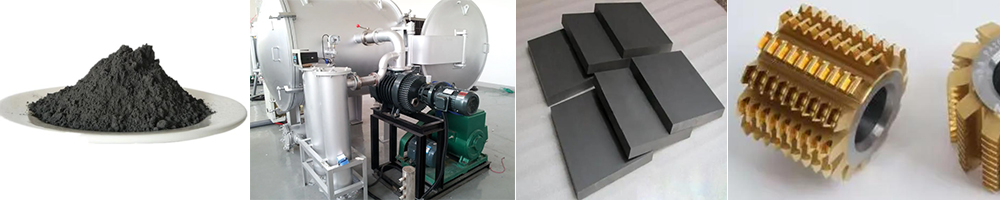
TiC is the hardest of the known carbides and is an important raw material for the production of cemented carbides.
Molten metallic titanium (1800~2400°C) can interact directly with Carbon to produce TiC. TiC is generally prepared industrially by reducing TiO2 with C under vacuum and high temperature (>1800°C).
WC- TiC alloys, WC + (WC-Mo2C-TiC) solid solution, TiC-TaC alloys, etc. are important high hardness, high wear-resistant cutting materials.
TiC is characterized by high thermal hardness, low coefficient of friction, low thermal conductivity, etc. Therefore, cutting tools containing TiC have higher cutting speed and longer service life.
Generally, WC tools with Titanium carbide coating have better cutting performance (coating of objects by reacting TiCl4 with CH4 under vacuum conditions at a high temperature of more than 1000°C).
5.7 Titanium hydride (TiH2)
The hydride of titanium is titanium hydride.
Titanium hydride is very brittle and is therefore used in the manufacture of powdered titanium.
TiH2 is also used in welding, where titanium dihydrogenates are thermally decomposed to precipitate new ecological hydrogen and titanium metal, the latter of which facilitates the welding and increases the strength of the weld.
5.8 Barium titanate (BaTiO3)
Barium titanate has remarkable "piezoelectric properties" and can be passed through a high frequency current to produce ultrasonic waves, so barium titanate is widely used in ultrasonic generators.
Railroad workers put it under the railroad tracks to measure the pressure of passing trains.
Doctors use it to make pulse recorders.
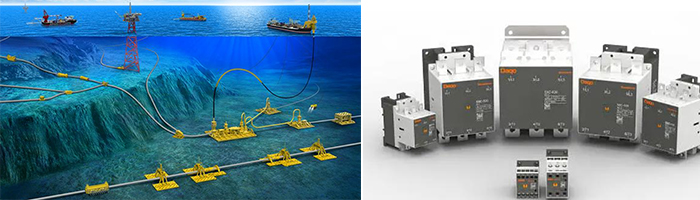
The underwater detector made of barium titanate is a sharp underwater eye, which can not only see the fish, but also see the underwater reefs, icebergs and submarines.
5.9 Titanium nitride (TiN)
Titanium nitride has a color similar to gold and is widely used in decoration.
TiN has a melting point of 2950°C, a Mohs hardness of 8-9, good thermal shock resistance. So it can be used as a coating for cutting tools.
TiN crucible is an excellent container to study the interaction between steel and some elements.
Titanium nitride has high electrical conductivity and superconductivity, so it can be applied to high temperature structural materials and superconducting materials.
5.10 Titanium trifluoride (TiF3)
Titanium trifluoride (Titanium trifluoride), referred to as titanium fluoride, which is blue crystal, insoluble in water, dilute acid and alkali.
It can be used to make titanium fluoride glass.
VI,Titanium vs. Other metals
6.1 Titanium vs. Zirconium
6.1.1 Mechanical property
Both Zirconium and titanium have the good ductility, processing performance. They can be cast, forged and welded with a variety of molding, lining and cladding, easy to manufacture a variety of complex shapes of chemical equipment, such as towers, heat exchangers, stirrers, pumps and valves, etc..
For the tower, they are usually used in the form of clad metal or liner metal. And according to the corrosion resistance, the lower part of the tower uses zirconium, the upper part uses titanium.
6.1.2 Corrosion resistance
Titanium and zirconium are complementary when used in harsh chemical environments. Both of them have similar excellent performance in some environments, but in some environments, one will be severely corroded, while the other has excellent corrosion resistance.
This can complement each other to meet the needs of modern chemical structure materials.
Zirconium is better in sulfuric acid concentration 70%, phosphoric acid to 55%, sulfurous, sulfamic acids, nitric acid, hydrogen peroxide, HCl,AlCl3,ZnCl2, all alkalies,organic compounds such as acetic, formic, lactic, and oxalic acids, and dry chlorine.
Pls check here for Zirocnium Introduction.
Titanium is suitable for oxidizing acids such as FeCl3, CuCl2, aqua regia and wet chlorine.
Titanium and zirconium for chemical applications are mostly unalloyed industrial grade, and their alloys are mostly used in military and nuclear engineering.
6.1.3 Price:
Price of Zirconium is usually 2 to 3 times of titanium, and 4 to 5 times of stainless steel.
6.2 Titanium vs. Hastelloy
6.2.1 Mechanical Porperty:
Hastelloy is easy to fabricate so it could use in mass production. Titanium has higher mentel point, and hard to machining, so it requires much higher technical process and advanced equipment support.
6.2.2 Corrosion Resistance:
Hastelloy has superior corrosion resistance at high temperatures, but titanium is still a better choice for some extreme corrosive conditions.
6.2.3 weight:
VII,Titanium equipment in the chemical industry applications
Most of the equipment used in chemical production in various types of corrosive media under the action of the conditions of work, the corrosion and corrosion resistance of the equipment materials is the design and use of equipment must be considered.
7.1 Fertilizer industry
7.1.1 Urea production equipment components
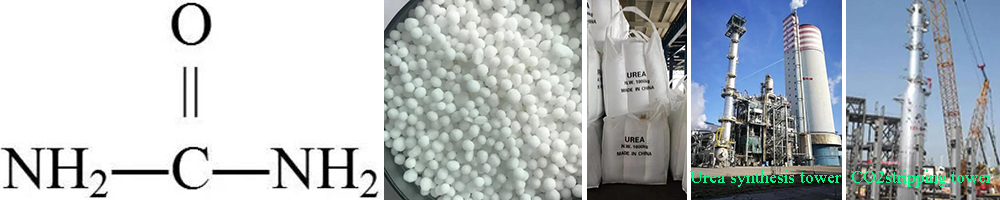
Titanium has better resistance to local corrosion than stainless steel in the melten urea medium. Because of the high corrosive of ammonium carbamate and liquid mixture of excess ammonia, urea and water at high temperatures and high pressures, which is the medium for synthetic urea production, titanium is needed by the high-pressure equipment of synthesis tower, carbon dioxide stripping tower, and1st stage of the separator.
Urea stripping tower is the heavier titanium lined equipment designed and manufactured by Chinese.
7.1.2 United alkali:
United alkali plant is suffering with strong corrosion of high concentrate ammonium chloride solution. The paint protection doesn't perform well. So, people use titanium to solve the problem.
In addition, titanium and titanium alloys can be used as chemical devices (such as hydrogen and nitrogen high-pressure compressors, etc.) of the valve, springs and electrochemical cathodic protection of the anode material, in order to improve its fatigue corrosion resistance and service life.
7.2 Chlor-alkali industry
Because titanium has excellent corrosion resistance in wet chlorine, chloride, chlorine solution. Will not occur point corrosion and stress corrosion phenomenon, which is generally stainless steel can not be compared, is also titanium in the chlorine industry and many industrial sectors in contact with chloride is used as a large number of equipment corrosion-resistant materials, it solves the chlor-alkali plant for many years the existence of common corrosion problems. Therefore, the chlor-alkali industry is one of the most widely used titanium equipment, the main titanium equipment are wet chlorine cooler, electrolytic tank metal anode, dechlorination tower heating tube, chlorine-containing fresh brine vacuum dechlorination pumps and valves.
7.3 Synthetic fiber industry
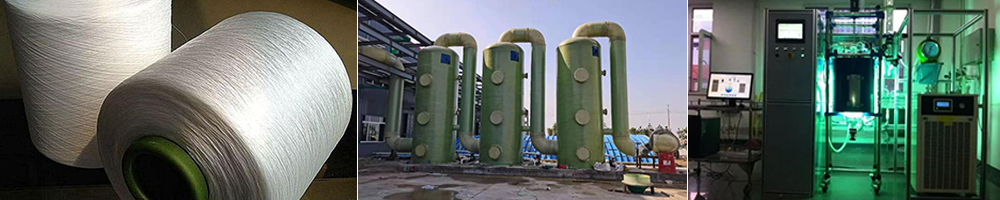
The srong corrosion material such as halogenated compounds (chlorides, bromides) has been used as catalysts or chlorides as intermediate media in the synthetic fiber industry during these years. So, using titanium as the main equipment corrosion-resistant materials is the solution.
The titanium equipment includes oxidation tower for polyester production, photochemical reactor of actam production, intermediate heater for salt hydrolysis, hydroxylamine heat exchanger, as well as the oxidation reactor for vinyl acetate production, and so on.
7.4 Dye chemical and pesticide production
There are varieties of dyes and pesticides and their intermediates, whose production equipment is often subject to strong corrosion by various acids and alkalis. So, a variety of corrosion-resistant materials have been applied for the equipment including the titanium and titanium alloy materials.
For example:
Maleic acid constant boiling tower, evaporator.
Useing titanium and titanium alloy not only can solve the corrosion, but also save the maintenance cost.
7.5 Others
In addition to the above applications, titanium equipment is also used in the oil refining industry to solve the serious corrosion problem of distillation equipment in the oil refining system.
In addition, because titanium resists seawater and chloride-containing media corrosion, it is made into components for pumps, valves, heat exchangers, condensers, piping in the salt and seawater desalination industry.
All in all , most of the modern chemical equipment are running in the high temperature and pressure, flammable and explosive, strong corrosion conditions under continuous operation, so titanium become more and more popular because of its good corrosion resistance, specific strength (strength / relative density).
As a professional reactor manufacturer,
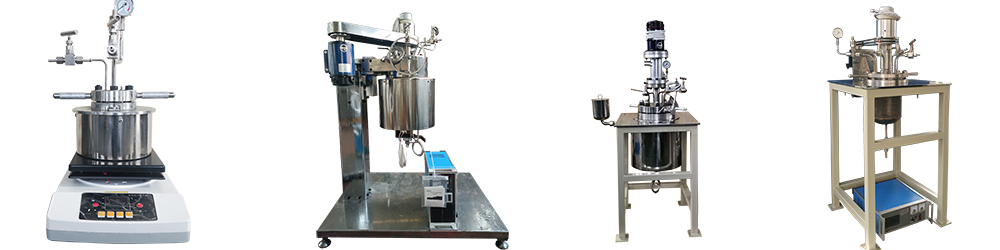
WHGCM has been using titanium as raw material to meet our customers request since established in 2010. The titanium reactor made by WHGCM with high corrosion resistance but high pressure resistance performance, has been wildely used in many fields such as food, pharmacy, chemical, dyestuff, agriculture, oil refining, scientific experiment and so on.
For the industrial application reactor, which refers the volume scales over 1,000 liters to 30,000 liters.
The cost of raw material would be very large which requires a great budget.
So, the Titanium Cladding plate, which a composite plate made of Tintanium alloy plate and cheap steel plate by explosion welding is applied.
WHGCM has been applying with this kind of Titanium cladding plate for years.
It is not only having feature of good corrosion resistance from titanium and good rigidity of steel, but also make the equipment made by this cladding plate much more ecnomic.
So, the titanium cladding palte reactor is an popular solution of using titanium caldding plate to meet customer's requirement.


